


Incorrect destruction of plant cover: agronomic impacts and mistakes to avoid
Plant cover is a pillar of conservation agriculture. It protects soil structure, promotes biological activity and improves fertility. However, poor plant cover destruction can negate these benefits and severely penalise the next crop. Poor timing, unfavourable weather conditions, unsuitable tools… What are the agronomic consequences of poorly destroyed cover and, above all, how can destruction errors be avoided?
When should plant cover be destroyed? The impacts of destroying it too late
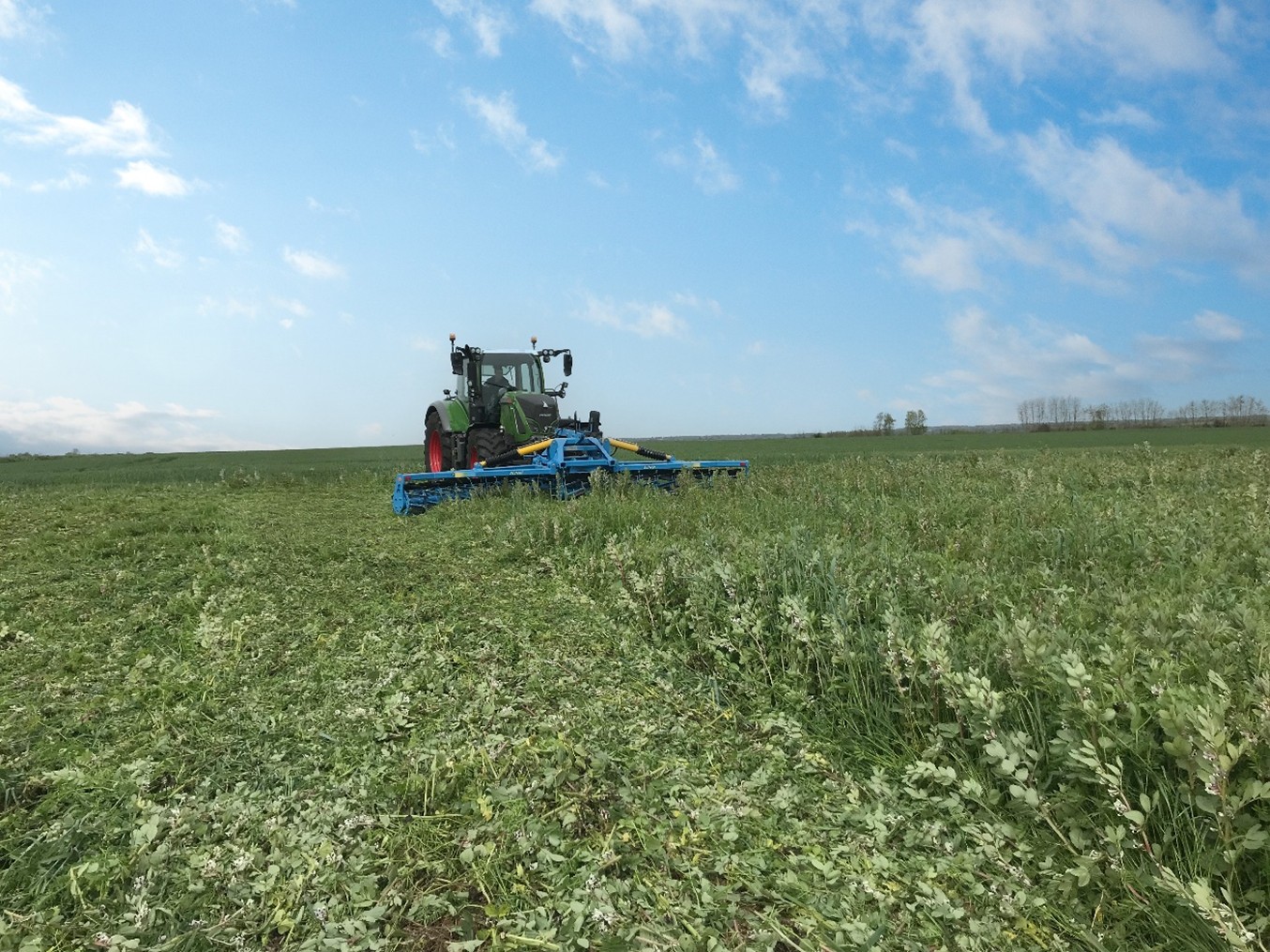
Waiting too long to destroy plant cover seriously impacts the success of the subsequent crop.
The lignification process is induced by the flowering of the plants used in the cover. At this stage, the carbon and nitrogen ratio is at its highest, which is not desirable when using a cover crop. The objective is soil cover and root density, with a low carbon and nitrogen ratio.
Cover that is too developed at the time of destruction prevents the soil from drying out properly and does not allow for good soil preparation for the next sowing.
Finally, if the decomposition of the cover is not complete before sowing, nitrogen and water resources will be drawn down by the cover, competing with the needs of the crop being planted.
There are numerous agronomic consequences:
- Problems with establishment in spring: difficulty mixing residues, requiring successive passes with implements.
- Uneven emergence, delayed growth, water stress.
- Loss of yield on the following crop.
- Increased risk of disease if residues remain fresh, especially for tuber crops.
Poor timing and weather conditions: risks to soil structure
The timing for destroying cover crops is not the only parameter to consider. Weather conditions also play a role. The influence of climate raises new issues. Mild winters no longer allow cover crops to be destroyed naturally, while overly wet springs make drainage difficult. Unfortunately, these factors have become almost the norm in certain regions in recent years.
Destroying cover crops on soil that has not drained properly leads to compaction, root asphyxiation and loss of structure. Conversely, on dry soil with cover crops that are still green, shredding becomes difficult and the cover crops can regrow, rendering the work ineffective.
It is therefore essential to observe and adapt your destruction technique to the weather and soil conditions to avoid ‘closing’ the profile.
Common mistakes and how to avoid them
Here are the most common mistakes made when destroying plant cover and the associated best practices:
Mistakes | Consequences | Best practice guidelines |
|---|---|---|
Destroy after going to seed | Risk of regrowth, loss of cover control | Intervene before flowering |
|---|---|---|
Working on soil that has not dried out | Compaction, asphyxia, difficult sowing | Wait until completely dry |
|---|---|---|
Using an unsuitable tool (too aggressive) | Destruction, no contact between residues and soil | Adapting to cover and conditions |
|---|---|---|
Lack of anticipation of the chosen cover | Incompatibility with the destruction method | Choosing species with destruction in mind |
|---|---|---|
Lack of control over the outcome | Regrowth of vegetation cover, loss of effectiveness | Check after 7–10 days and adjust if necessary. |
|---|---|---|
Tools that are suitable and comply with agricultural regulations
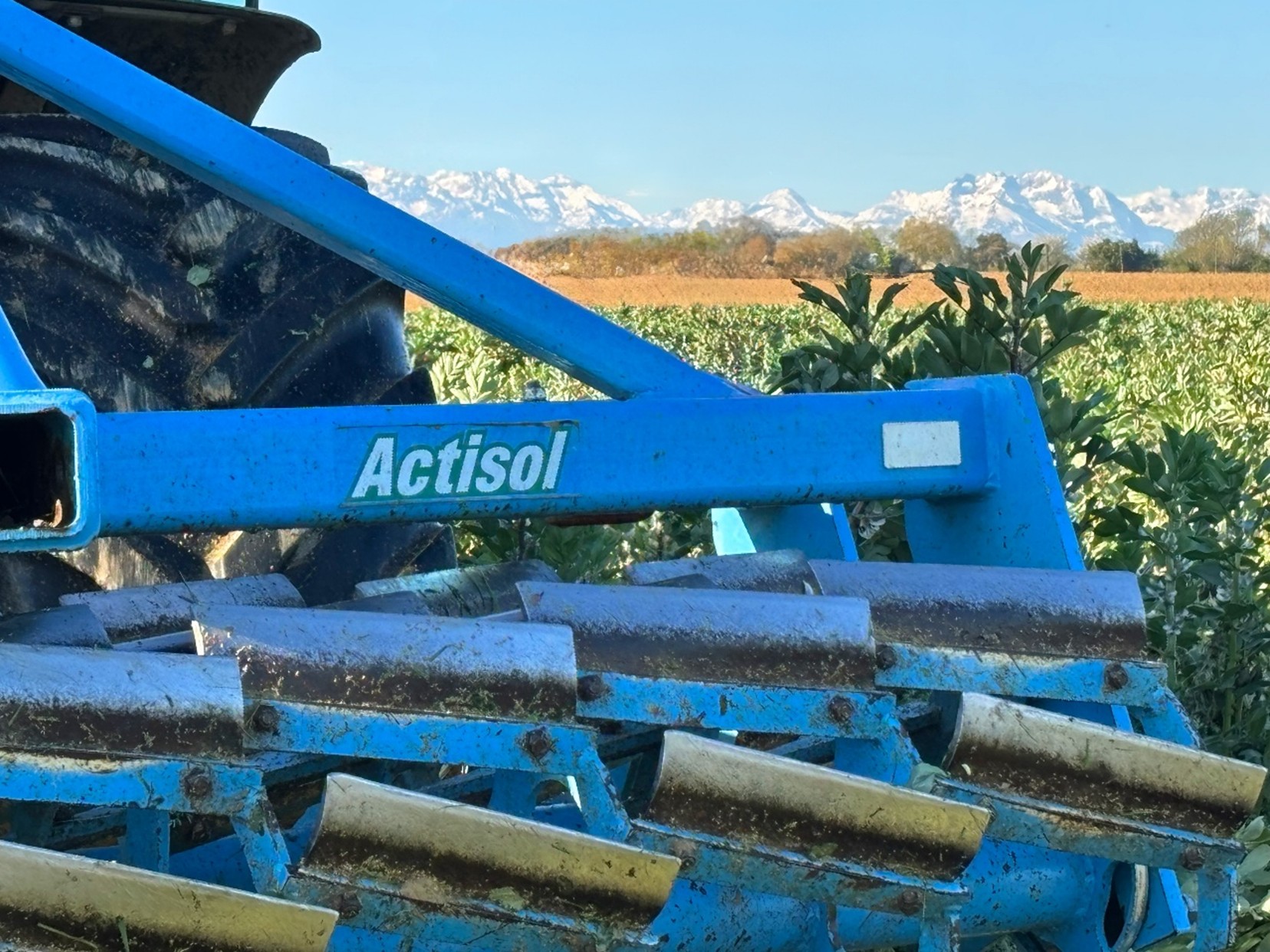
The choice of tool for destroying plant cover is crucial for preserving soil structure, promoting the decomposition of residues and ensuring the successful establishment of the next crop. At Actisol, we have developed a range specifically designed for cover crop destruction.
- MULCHING: The Stell’Air model is a range of tools with the tightest stars on the market. Its stars attack even the densest vegetation vertically. This loosening action remains superficial and creates a honeycomb surface profile. Equipped with a bar roller, it cuts the vegetation horizontally and provides a regular, blown mixture of residues, promoting their decomposition. With very light burial of plant matter to a maximum of 5 cm, while respecting the rule of 2/3 plant matter and 1/3 soil visible on the surface, the Stell’Air meets the criteria for true mulching.
- COMPLETE SURFACE DESTRUCTION: The Roll Krop range can be used to flatten, lacerate and cut through vegetation cover. For all types of vegetation, its staggered steel blade rollers offer a precise working angle and spiral rotation. Its lightweight design provides formidable efficiency even on the most difficult species to destroy (oats, etc.).
To conclude
Destroying the cover crop prepares the ground for the success of the next crop. Anticipating, observing and adapting techniques and choices according to soil type, climate and the stage of the cover crop are the foundations of a well-managed crop rotation programme.