


Demonstrations of agricultural machinery: ACTISOL’s expertise
At ACTISOL, demonstrations of agricultural machinery enable us to assess how the machines perform in real-world conditions and to provide practical solutions to the challenges faced by farmers. Florian, a demonstration technician, talks to us about his role and what makes ACTISOL tick out in the field.
1-Career path
Could you introduce yourself and tell us about your career path ?
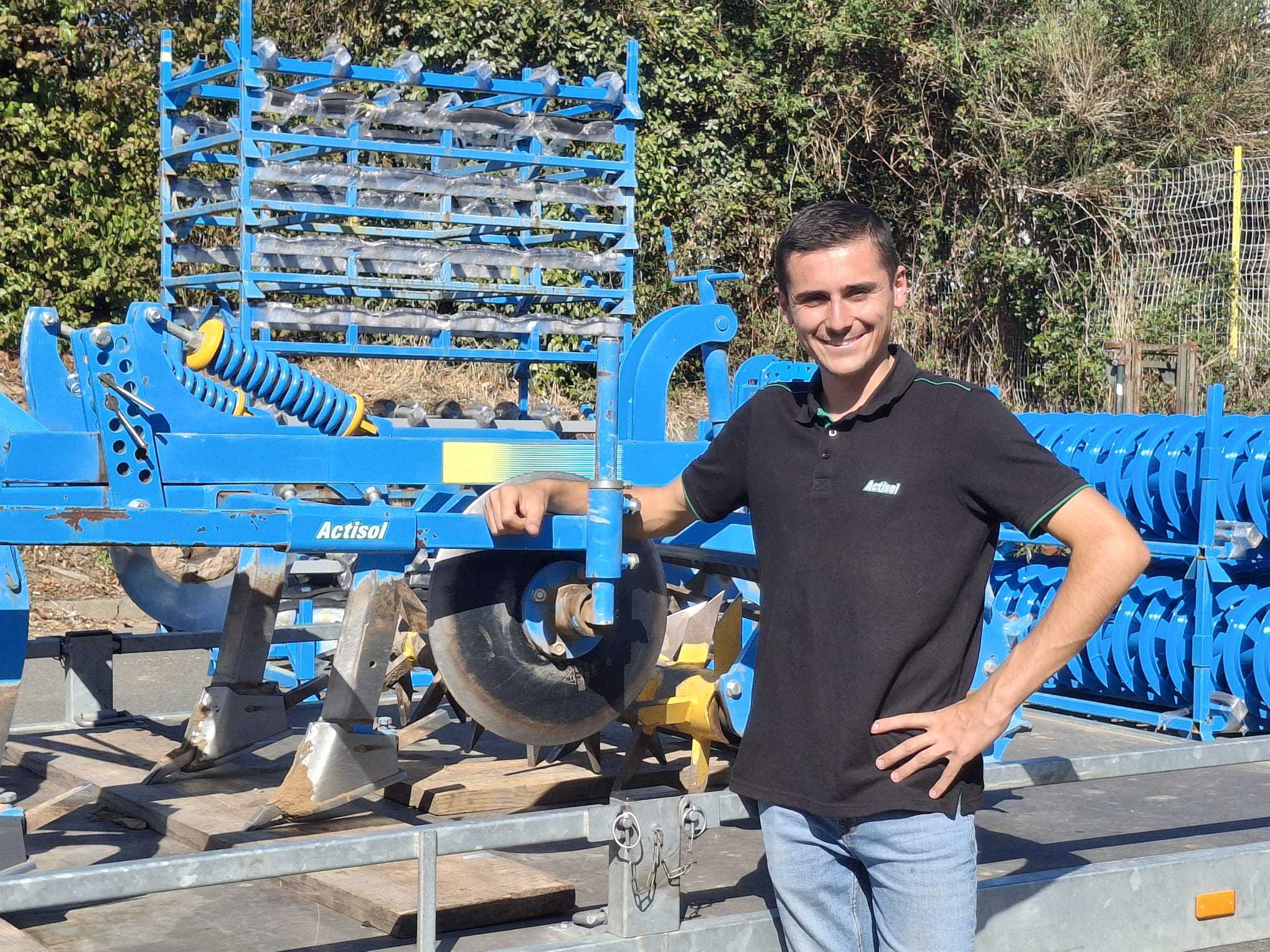
My name is Florian. As the son of a farmer, I completed a vocational baccalaureate in agricultural machinery. I then joined the ACTISOL team as part of my BTS in Agricultural Engineering and Management (GDEA), working on a work-study basis in both the design office and the production department.
I continued my studies with a vocational bachelor’s degree focusing on agronomy, agroecology and sustainable development. I completed this with a French manufacturer specialising in direct drilling. Finally, I went on to do a master’s degree in agribusiness development. I then returned to ACTISOL, this time to the sales department, with the aim of revitalising the demonstration programme.
Today, having completed my degree, I continue in my role as a sales demonstrator across the whole country.
What exactly do your duties involve?
My responsibilities include demonstrations, commissioning, supporting customers and providing technical support. I am also involved in training and explaining the agronomic aspects of the machinery, whether for arable farming, market gardening or viticulture.
My main role is to provide practical answers to farmers who wish to discover our machinery or deepen their knowledge of our products. The aim is to enable them to test the machinery under their own working conditions. I also act as a link between the field and the factory. Feedback from users helps us to better understand their needs and to develop our products in line with expectations from the field.
2-Field trials of agricultural machinery
How is a demonstration on a farmer’s farm organised?
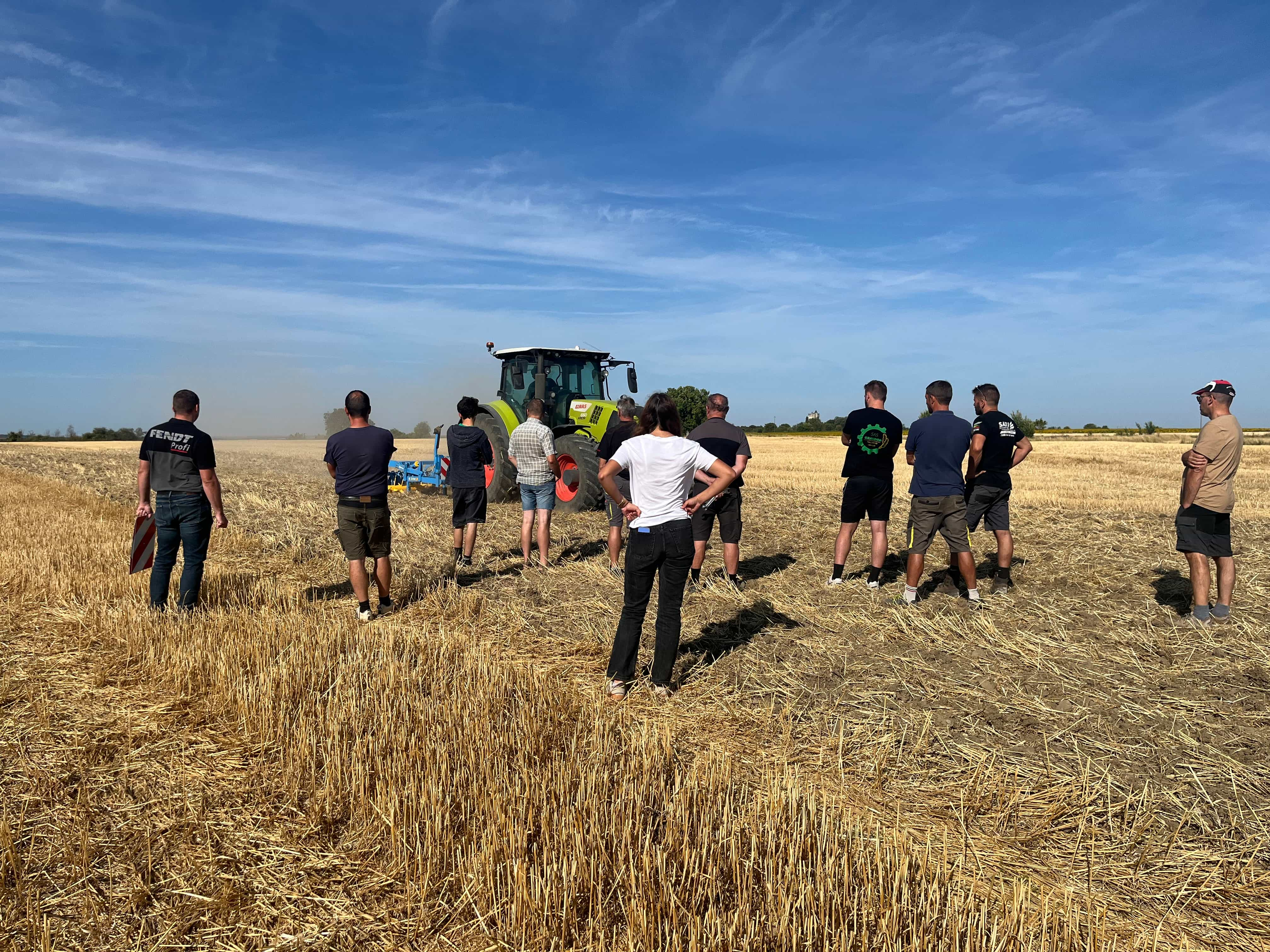
It usually begins with an enquiry from our distribution network or directly from a farmer who contacts us, typically via our website or social media. We then discuss the matter with the client to fully understand their expectations and define the objectives of the trial. We then sort out the practical details: availability of the machine, whether a tractor is required, access to the field and organising the appointment. The aim is to allow sufficient time to carry out a meaningful trial and provide precise answers to the farmer’s questions.
What makes a demonstration successful?
For me, a demonstration is successful when the farmer gets concrete answers to their questions. It is not simply a matter of presenting a machine or showing that it works. Above all, we need to check that it meets their technical and agronomic needs. This involves observing the work being carried out, explaining how the machine works and discussing matters with the farmer. Even if the demonstration doesn’t lead to an immediate sale, it’s still useful if the customer leaves with a better understanding of the proposed solution.
3-Relations with farmers
What is the typical profile of the farmers you meet?
There isn’t really a typical profile. However, the farmers I meet often have one thing in common: they are looking for technical solutions to improve the health of their soils and their farming practices. At ACTISOL, we don’t think solely in terms of machinery. Our approach is based on the link between machinery and agronomy.
We therefore meet farmers who are concerned about the structure of their soils, how they function and their capacity to produce sustainably. Some wish to move away from their traditional practices, whilst others are looking to optimise systems that are already based on conservation agriculture.
What are customers’ main expectations?
Above all, customers want to know what our machines are actually capable of doing under their specific working conditions. This may involve breaking up compacted soil, improving soil aeration, managing grassland, or preparing plots before planting a crop. The challenge is to show them how a technical solution can address a specific agronomic problem. We aim to put soil function back at the heart of farm management.
4-Technical knowledge
What technical skills are essential?
First and foremost, you need to be thoroughly familiar with the product range and have a clear understanding of how each machine works. My time in the design office and on the production floor at ACTISOL was a great help. My training courses also enabled me to gain additional agronomic knowledge. This dual skill set is essential in my line of work. You need to be able to explain how a machine works, but also why and under what conditions its use may be appropriate from an agronomic point of view.
5-ACTISOL machines
Which machine is the most popular for demonstrations?
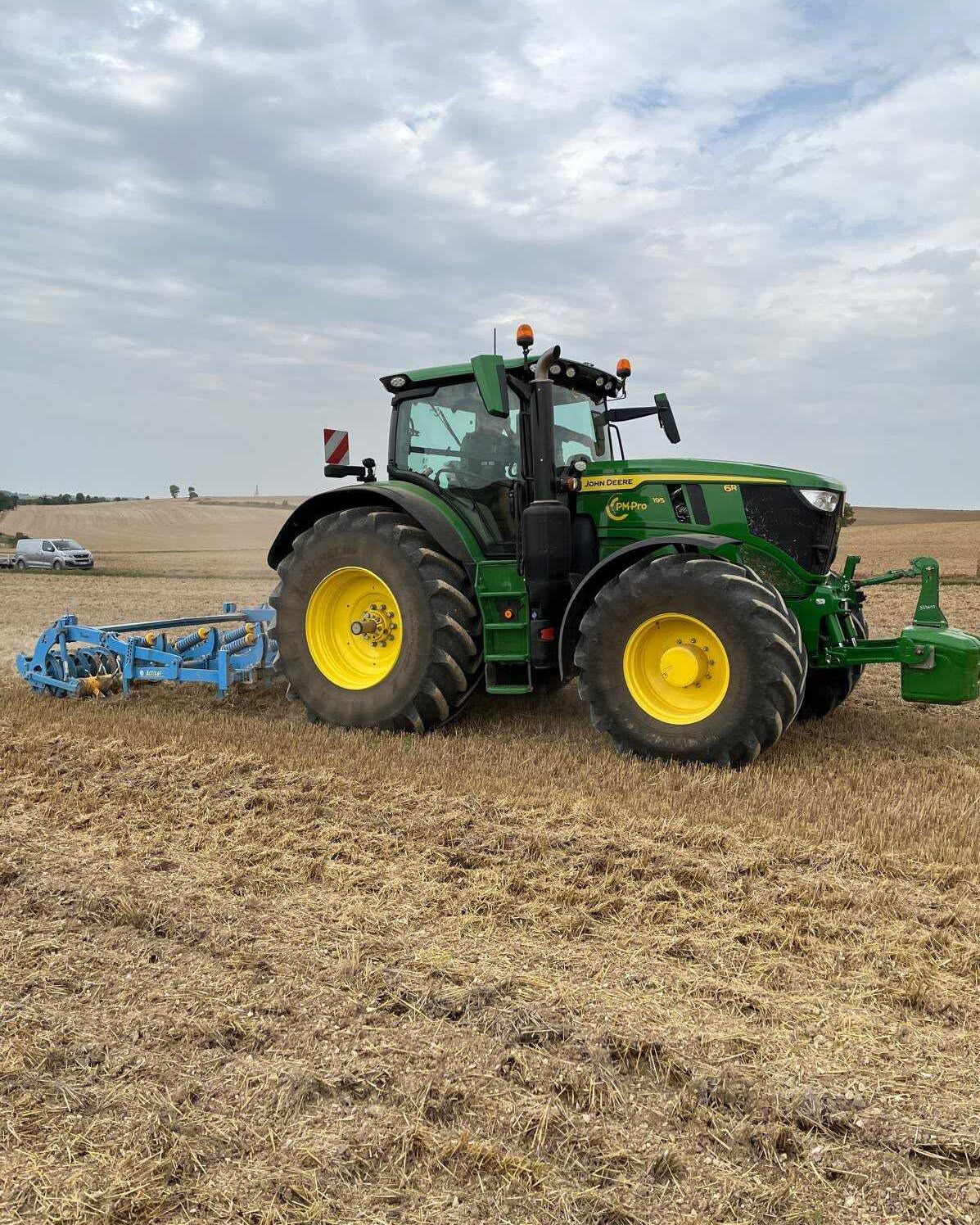
It is difficult to single out any one machine. Enquiries relate to different products depending on the sector and the specific challenges faced. Soil cracking, however, remains a key issue. This technique is the hallmark of the brand and attracts a great deal of interest. Enquiries may relate to arable farming, viticulture or market gardening, with different objectives: soil maintenance, grassland management, plot preparation or crop establishment.
Which machine impresses you the most from a technical point of view?
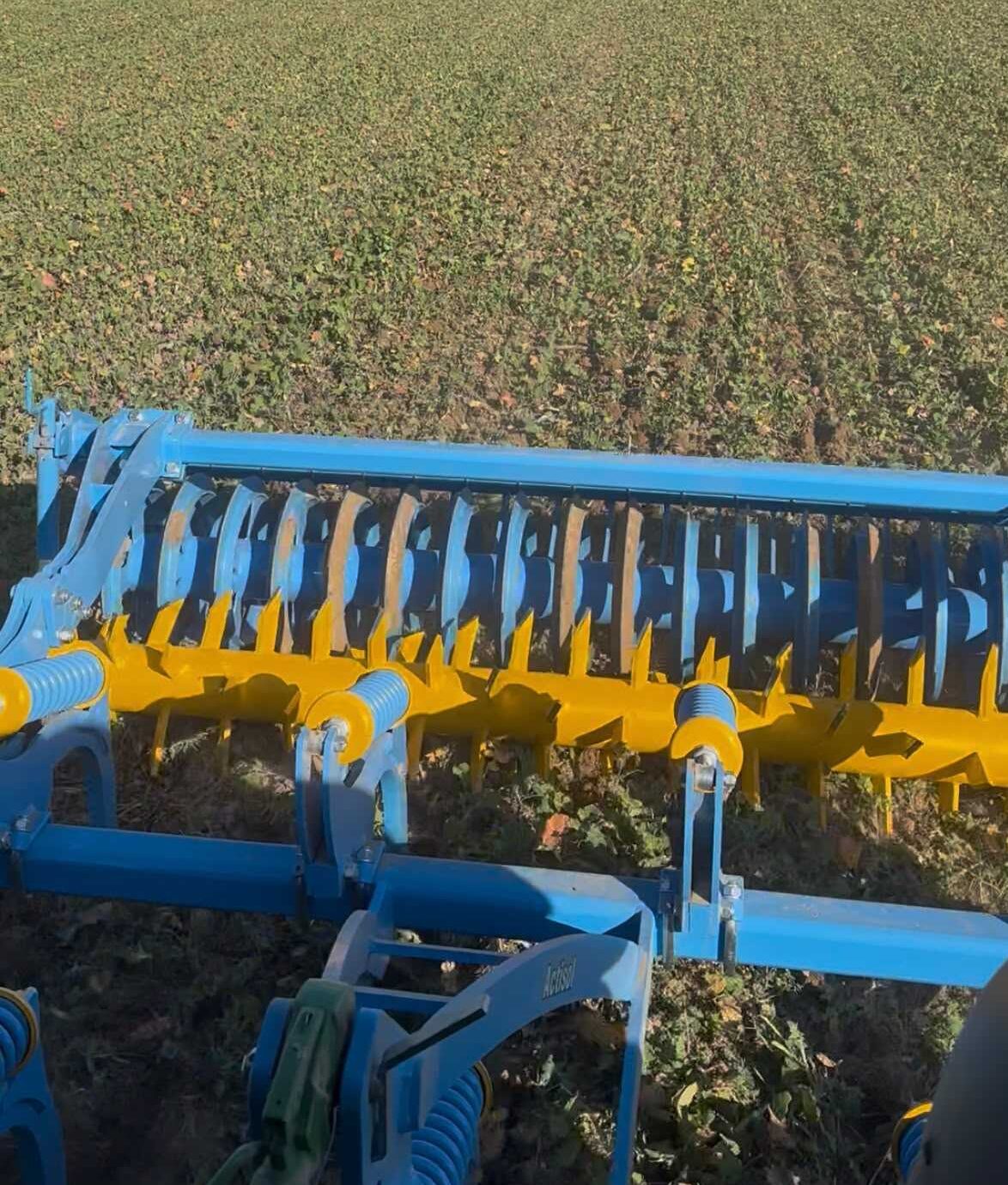
What impresses me most, beyond any particular machine, is the work carried out by the ACTISOL teeth and its ability to crack the soil whilst preserving its structural profile. The benefit lies in working at depth without necessarily mixing the different soil horizons. This approach helps to promote water circulation and preserve the soil’s structure, as well as the conditions favourable to its biological activity.
With alternating periods of drought and episodes of heavy rain, water management is becoming a major challenge for farms. Soil cracking can help improve the physical functioning of the soil when carried out under the right conditions. It is this ability to combine a mechanical intervention with an agronomic objective that particularly interests me.
6-The image and future of agriculture
Do you see any changes in the way the soil is worked?
Yes, I’ve noticed a shift in the way farmers view their soil. There is a growing realisation that soil is not simply a medium for production. It is a living environment whose structure and functioning must be preserved. This shift is reflected, in particular, in a growing interest in minimising tillage, crack-tilling and practices that help to preserve soil fertility. I believe this awareness will continue to grow, particularly in the face of climate challenges and the need for better water management.
How does ACTISOL fit into conservation agriculture?
ACTISOL is part of this trend thanks to its approach to vertical soil tillage and its specialisation in crack tillage. The aim is to work on the soil structure without systematically seeking to mix the different soil horizons. This approach makes it possible to address certain compaction issues whilst preserving the soil profile as much as possible. Cracking is therefore a valuable tool in systems that seek to minimise soil disturbance. Conservation agriculture, however, is based on several complementary principles. Cracking alone is not enough: it must form part of a holistic approach to soil cultivation, plant cover and crop diversification.
7-Trivia
A time when a machine took everyone by surprise?
What often surprises farmers is seeing the work carried out at depth without necessarily producing a very visible result on the surface. To demonstrate this, we can use educational tools such as the spade test or the penetrometer. These enable us to observe the soil structure and better understand the effect of machinery passing over the soil. It is interesting to note that it is not always necessary to visually disturb the surface to obtain a meaningful result at depth. These observations enable us to look beyond mere visual appearance and to refocus the assessment on how the soil functions.
8-Final word
How would you summarise the role of a demonstrator at ACTISOL?
It’s a very versatile role that combines engineering, agronomy, business and interpersonal skills. I particularly enjoy working in a company on a human scale, where the link between the factory and the field is essential. My role involves supporting farmers, providing them with practical solutions and feeding back their needs to help drive the development of the machinery.
It’s a fascinating job because it allows you to learn constantly and stay in touch with the realities on the ground. There are always new situations to discover, new challenges to understand and solutions to develop together with the farmers.