


Living soil and soil structure: finding the right balance in spring
In spring, soils enter a key phase. Biological activity resumes, weather conditions warm up but sometimes remain unstable, and field work begins again. In this context, one question often arises: how can we preserve living soil while maintaining a structure that is favourable to crops? Finding the right balance is essential for soil health and optimising yields.
Living soil and soil structure: two inseparable concepts
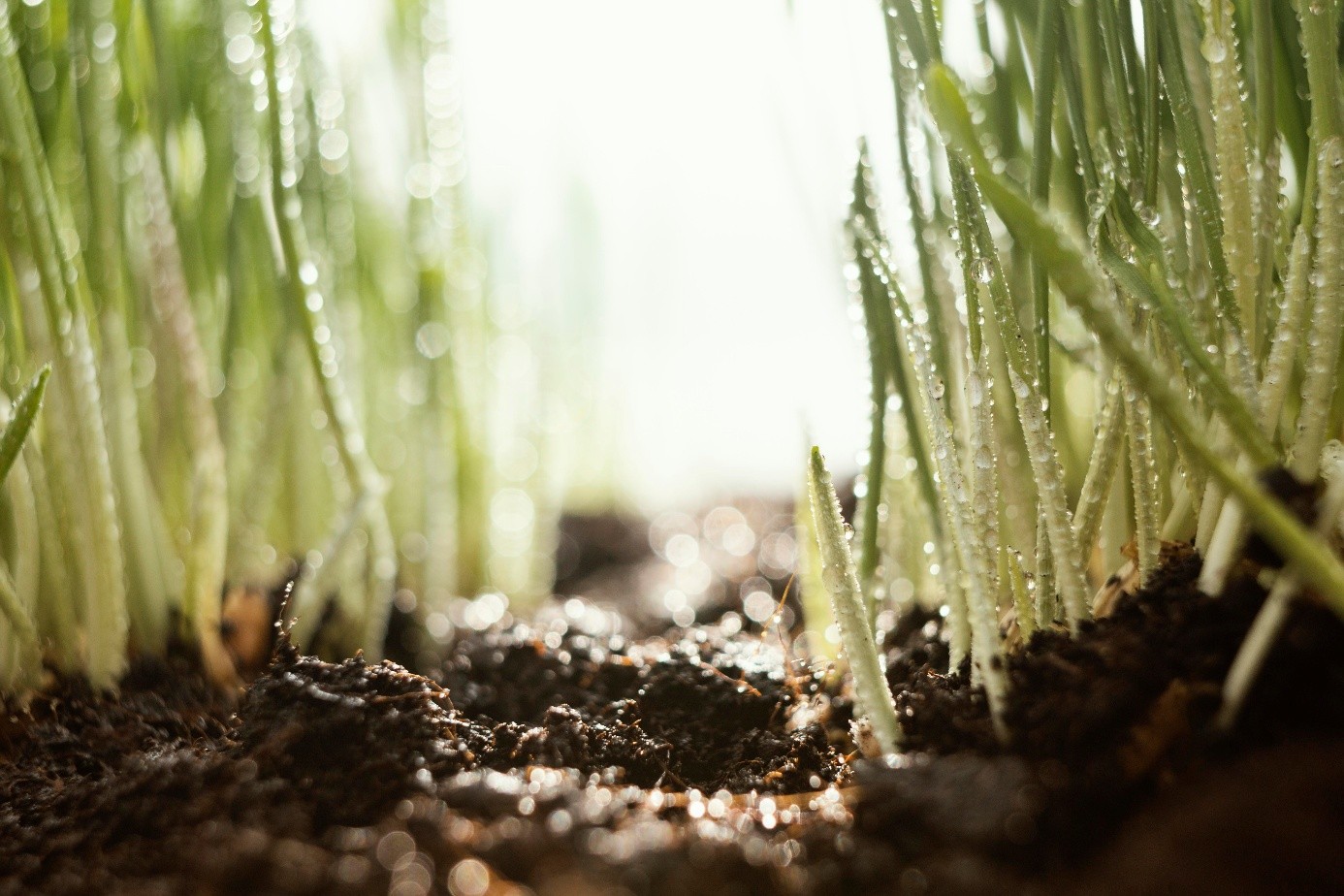
A living soil is above all a biologically active soil. Microorganisms, earthworms and fungi contribute to the decomposition of organic matter and the creation of stable aggregates, thus preventing erosion. Biological activity therefore contributes directly to the quality of the soil structure.
Well-structured soil allows for good water infiltration and deep rooting. Biological life and structure are therefore not opposed, but reinforce each other.
Why is spring a sensitive period for soil balance?
After winter, soils are often fragile. Residual moisture, combined with the resumption of mechanical operations, can quickly lead to structural damage such as soil compaction if conditions are not right.
Spring is also when biological activity in the soil resumes. Poorly drained, already compacted or excessively worked soil can slow down this natural process.
Conversely, a total lack of intervention can allow compacted or hydromorphic areas to persist, limiting exchanges and permanently impairing soil function. The risks vary depending on the type of soil:
- Clay soils: susceptible to deep compaction, retain water but compact easily.
- Loamy soils: good fertility, but risk of erosion and surface compaction.
- Sandy soils: good aeration, but low water retention capacity and lower organic matter content.
Understanding these differences allows you to adapt your soil cultivation methods and preserve microbial life.
Soil cultivation: a lever to be used with precision
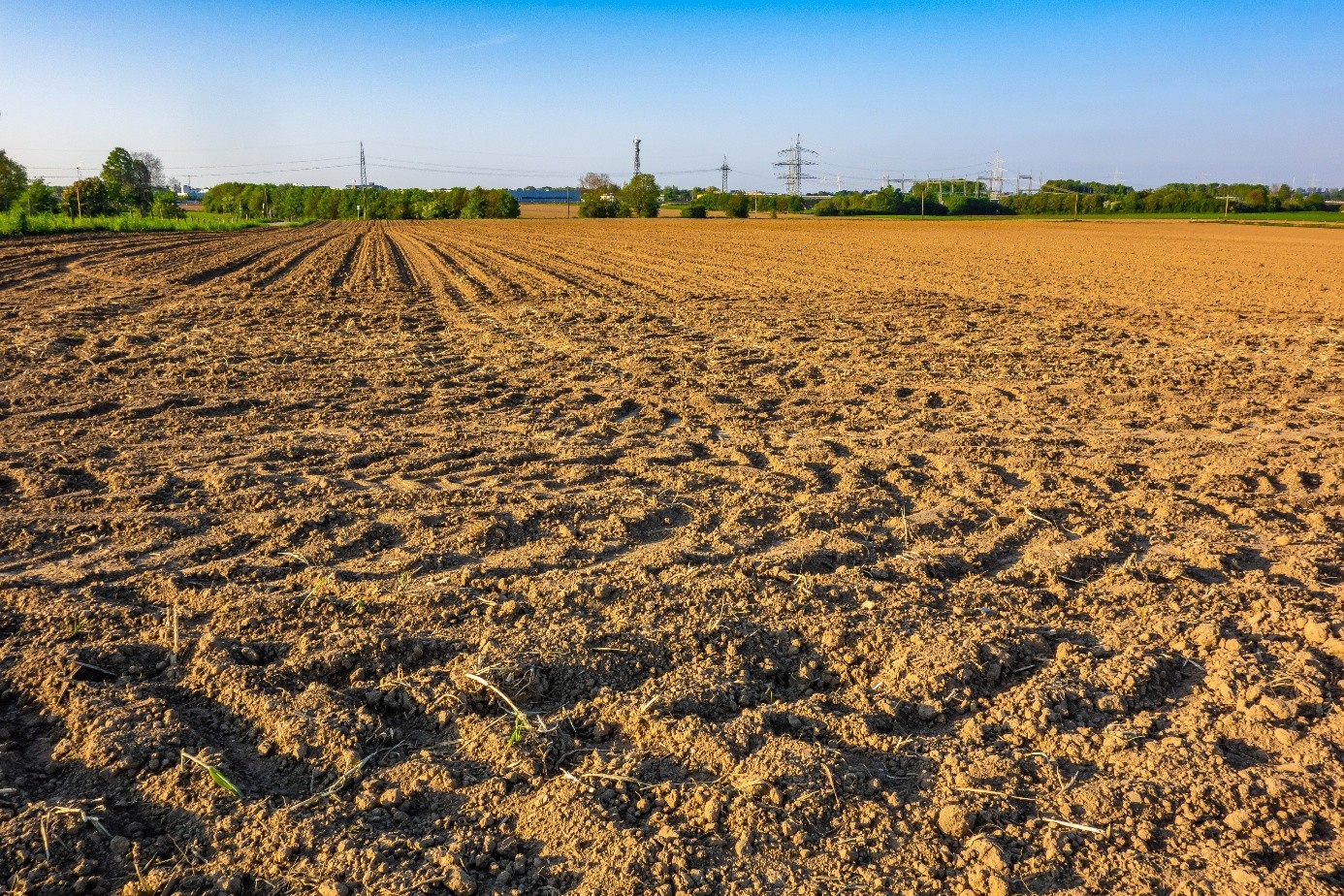
Soil cultivation remains an essential agronomic tool, provided it is carried out sensibly. The aim is not to cultivate systematically, but to intervene where necessary, at the right time and to the right depth. To do this, it is essential to observe your soil in order to adapt your work (spade test, profile, etc.)
In spring, the most important things to do are:
- Respect drainage: working on soil that is too wet can cause deep compaction.
- Limit the number of passes: each pass of the machine can reduce porosity.
- Avoid overly aggressive operations: deep ploughing or rotary harrowing on wet soil disrupts the structure and biological life.
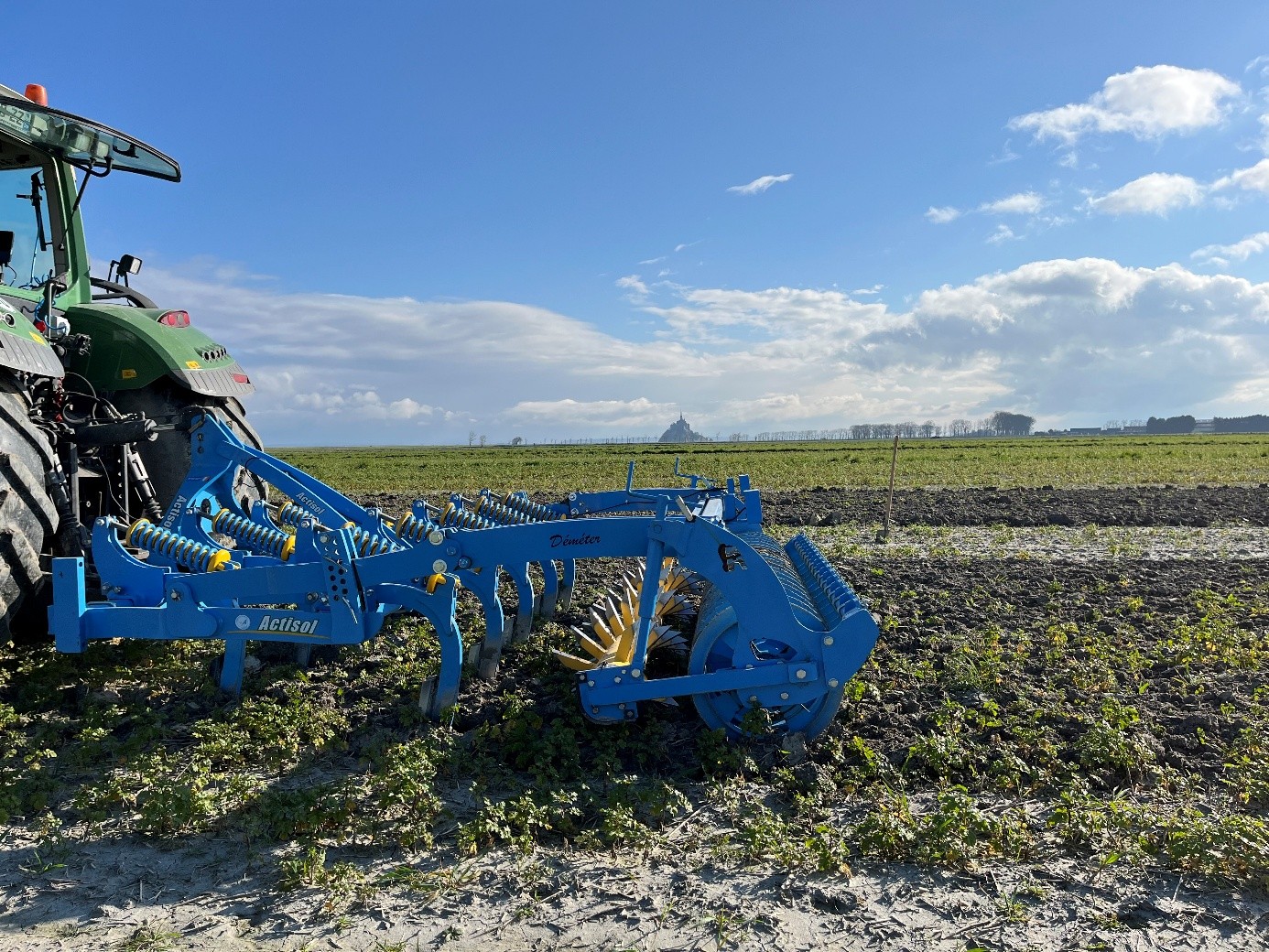
Different tools have different effects: the Actisol crackers acts on deeper layers without disturbing the surface, while the rotary harrow can be useful for superficial aeration. Choosing the right tool for the soil condition is key to maintaining a sustainable balance.
Correct compaction while preserving soil life
Compaction remains one of the main obstacles to crop growth. It limits porosity, hinders biological activity and restricts root development. There are two main types:
- Surface compaction: affects the top few centimetres, limiting infiltration and the development of young roots.
- Deep compaction: caused by heavy machinery, it hinders access to water and nutrients for deeper roots.
When compaction is identified, careful decompaction can be beneficial. The challenge is to intervene without disturbing the soil horizons. Properly conducted decompaction promotes the resumption of air-water exchange and creates conditions conducive to biological activity.
Complementary techniques can be implemented:
- Plant cover: protects the soil from erosion and maintains microbial life.
- Crop rotation: certain plants help to naturally decompact the soil.
- Use of light equipment: limits mechanical compaction.
The Actisol approach: intervening without disruption and at the right time
At Actisol, our approach to soil cultivation is based on a simple principle: only intervene when the soil needs it and is ready. The aim is to balance agronomic performance with respect for the soil’s natural functioning.
With proven field expertise and soil cultivation equipment designed to preserve biological activity and structure, Actisol supports farmers in their quest to achieve this balance. Preserving living soil while maintaining an efficient structure is above all a question of observation, timing and appropriate technical choices.
Practical tips for preserving living soil in spring
- Regularly observe soil condition (spade test, profile).
- Limit the number of passes and adapt the load of machinery.
- Only work the soil after it has dried out sufficiently.
- Encourage crop rotation and plant cover.
- Choose equipment suited to the type of soil and the depth to be worked.
These practices ensure a balance between structure and biological life, guaranteeing soil health and successful crop establishment.