


After harvest: preparing your soil and ensuring a successful next crop
The period following the harvest is often seen as a phase of rapid transition. Yet it is a crucial time for soil dynamics. Even before cover crops are established, the soil enters a decisive phase: that of biological and structural recovery.
During this short window, numerous processes take place: the breakdown of plant residues, the reactivation of microbial activity, and the natural restructuring of soil layers and porosity. When managed correctly, this period directly influences the quality of subsequent crops, the availability of nutrients, and the soil’s ability to withstand climatic fluctuations.
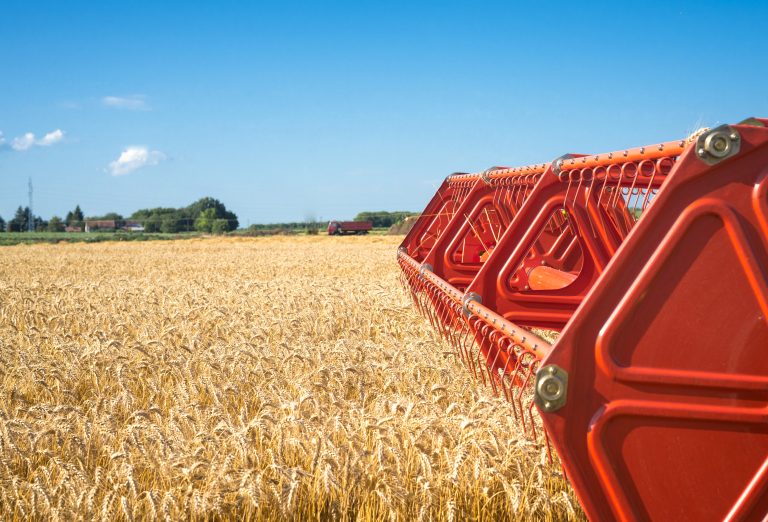
1. Why does soil activity slow down after harvest?
A teaspoon of healthy soil can contain more living organisms than there are people on Earth! It is sometimes assumed that soil biological activity will naturally resume as soon as the harvest is over. In reality, this depends heavily on the physical and biological conditions of the field. Living organisms: bacteria, fungi, earthworms and other macrofauna, need a favourable environment to carry out their functions of decomposition, mineralisation and soil structuring.
Three factors play a major role: air circulation, water availability and the presence of readily degradable organic matter. Crop residues left after harvest constitute a significant source of carbon, but their utilisation depends directly on soil life.
When the soil is compacted or poorly structured, these processes are restricted, which can occur after harvesting due to the passage of heavy machinery. The decomposition of residues then slows down, as soil life is stunted. This situation can lead to an accumulation of poorly degraded residues on the surface, a reduction in soil biodiversity and a decrease in the availability of nutrients for subsequent crops.
2. Soil decompaction after harvest: is subsoiling necessary?
According to various agronomic sources, soil compaction can reduce root penetration and lead to yield losses of between 5% and 30%, depending on the crop, the degree of compaction and climatic conditions.
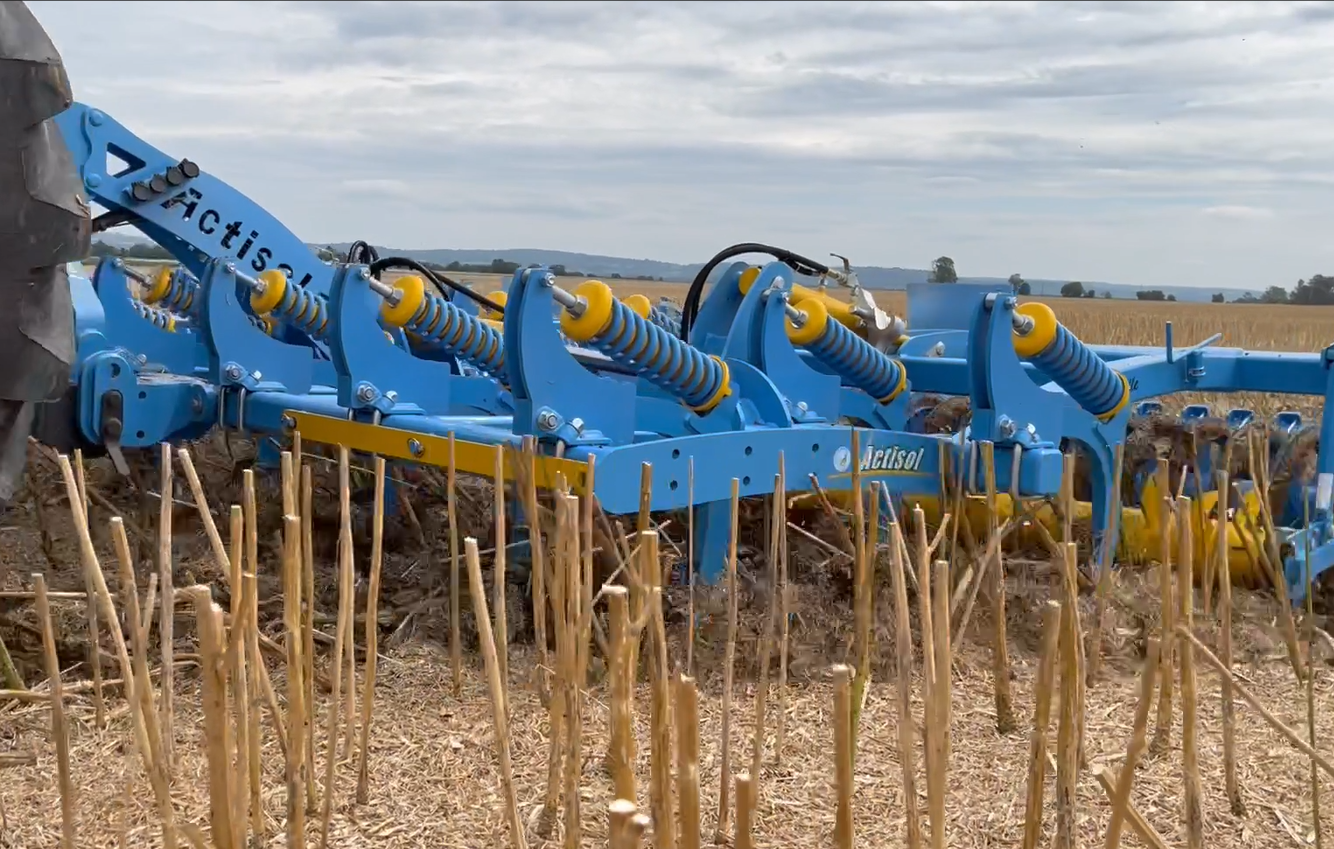
Before establishing cover crops, certain mechanical operations can help restore the soil’s physical properties. The aim is not to increase the number of passes or to work the entire soil profile deeply, but to target compacted areas in order to reactivate the soil’s natural vertical structure and facilitate the establishment of the cover crop.
Unlike ploughing, the use of a cracker minimises disruption to biological activity as the soil layers remain in place. It also allows plant residues to remain on the surface (no deep incorporation).
ACTI TIP: A mixing roller positioned behind the teeth of the cracker allows for a light mixing of soil and straw, which promotes and accelerates decomposition.
However, this operation must be carried out judiciously and preceded by an assessment to verify the actual presence of compacted areas and to adjust the working depth accordingly.
Careful work adapted to the conditions allows you to:
- Revive biological activity by recreating conditions favourable to its development
- Promote root penetration of catch crops and, by extension, of future crops
- Improve rainwater infiltration (reducing the risk of waterlogging and run-off)
3. How do catch crops improve soil structure?
Cover crops now play a central role in soil conservation and regeneration strategies. They actively contribute to improving the physical, chemical and biological properties of fields.
Thanks to their root systems, they help to naturally structure the soil, maintain continuous biological activity and limit nutrient losses during fallow periods. Certain species are also capable of mobilising poorly available nutrients or producing significant biomass that will enrich the organic matter stock after destruction.
However, their effectiveness depends directly on the growing conditions. Compacted soil or soil with low porosity limits germination, reduces root development and diminishes the cover crop’s ability to penetrate deeper soil layers. Conversely, well-structured soil promotes uniform growth, rapid rooting and better utilisation of available water.
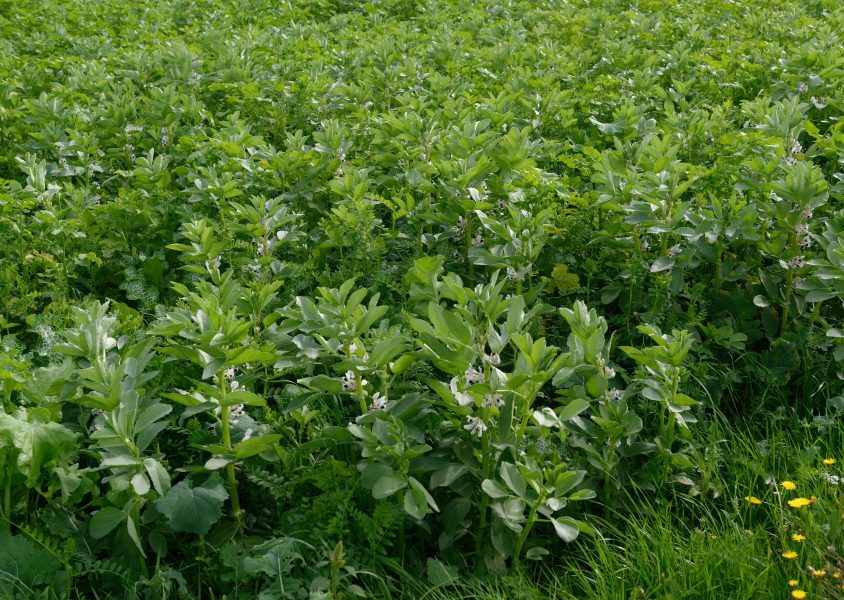
The success of cover crops therefore depends as much on the choice of species as on the quality of the soil structure at the time of sowing. The more quickly the cover crop establishes itself and develops an efficient root system, the greater its agronomic benefits will be.
Depending on the species chosen and the growing conditions, a cover crop can produce between 1.5 and 5 tonnes of dry matter per hectare.
4. Why is the post-harvest period crucial for the soil?
The post-harvest period is often limited in time. The management of crop residues, soil restructuring and the preparation of cover crops all contribute to planning for the following growing season.
The management of crop residues directly influences carbon and nitrogen cycles. Distributing them evenly promotes steady decomposition. Any soil restructuring measures help to restore the soil’s natural functions before cover crops are established.
This period is therefore a very important phase. Decisions taken in the weeks following the harvest have lasting repercussions on soil structure quality, biological activity, water management and the yield potential of future crops.
Conclusion
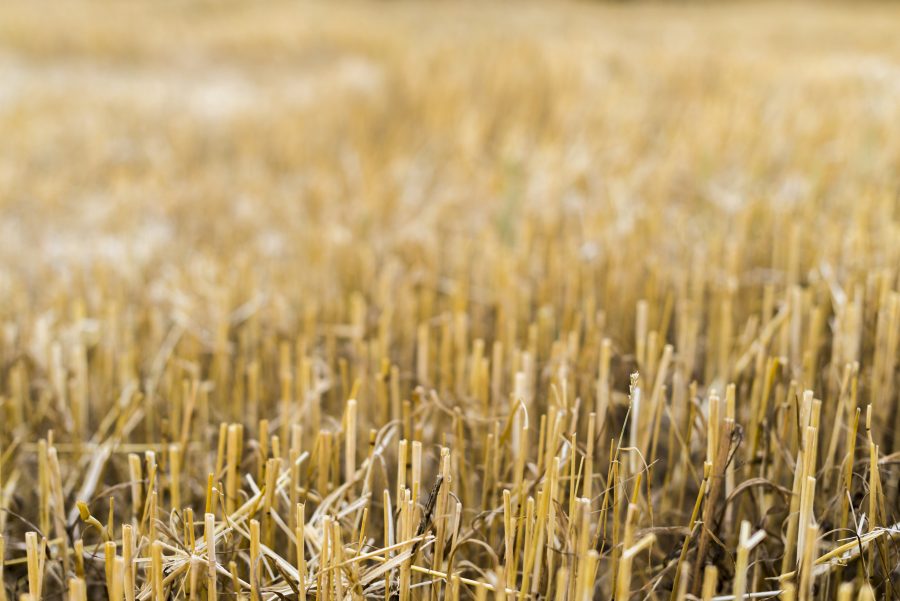
Revitalising soil life after harvest does not rely solely on the introduction of catch crops. It begins with one essential step: restoring the soil’s functional structure.
A sufficiently aerated and permeable soil provides the necessary conditions for the development of underground biodiversity, the effective decomposition of plant residues and the growth of root systems. Good structure, combined with dynamic biological activity and appropriate management of crop residues, enables a sustainable improvement in soil fertility and the performance of subsequent crops.